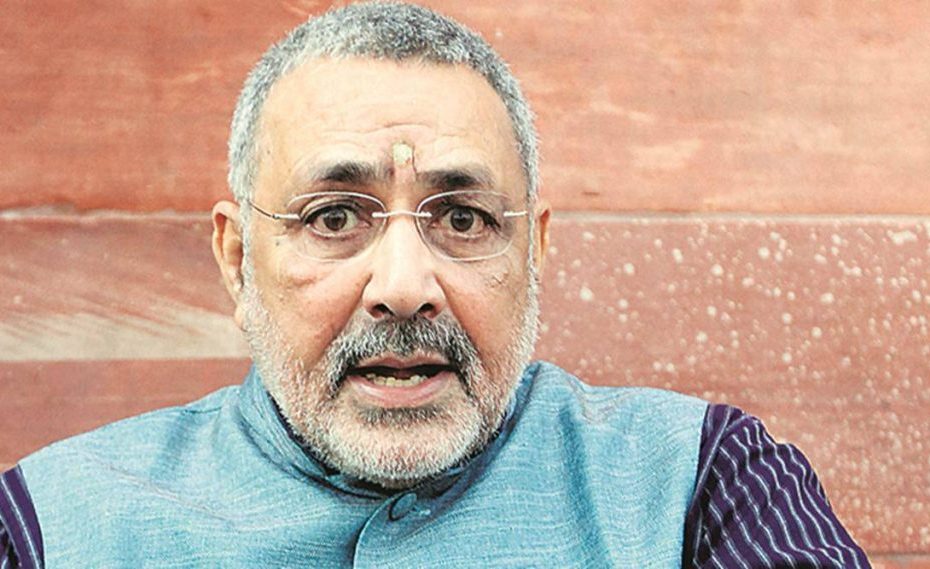
Union Minister and BJP leader Giriraj Singh on Tuesday described People’s Democratic Party (PDP) chief and former Jammu and Kashmir Chief Minister Mehbooba Mufti as a “terrorist,” triggering sharp condemnation.
Reacting to Mufti’s protest in Srinagar seeking restoration of Articles 370 and 35A, Singh said: “Mehbooba Mufti is a terrorist. I said this because she sided with terrorists for so long; she spent a brief period with us, and we tried to set her on the right path, but when she didn’t change, we let her go.”
Calling August 5 a “historic day,” he compared it to Independence Day and Republic Day. “This is a historic day for India… one that realised the dreams of Sardar Patel and the aspirations of countless Indians. Now, there is one nation, one flag, one Prime Minister, and one Constitution,” Singh stated.
The PDP termed the comments “outrageous, irresponsible and beneath the dignity of a Union Minister.” MLA Waheed-ur-Rehman Parra said they reflected “nothing but prejudice and political intolerance” against a former Chief Minister and senior Muslim woman leader.
https://x.com/parawahid/status/2084884047898214554?s=61
AIMIM chief Asaduddin Owaisi reminded the BJP of its earlier alliance with Mufti’s party: “You were the ones who formed an alliance with her and sat together eating dhokla. What was that then?”
The exchange occurred on the seventh anniversary of the abrogation of Article 370. On 5 August 2019 the Centre revoked the former state’s special status and bifurcated it into the Union Territories of Jammu and Kashmir and Ladakh.
Mufti led protests demanding restoration of Articles 370 and 35A. She alleged that several PDP leaders and workers were detained or placed under house arrest beforehand. Thanking participants for “peaceful yet resolute protests,” she said no amount of “manufactured normalcy” could erase the people’s demand for dignity, justice and restoration of Article 370.
Critics maintain the decision was unilateral, followed by a communications blackout, mass detentions and restrictions on civil liberties, and that promised gains in development and normalcy have largely failed to materialise. They also argue the move weakened constitutional autonomy and raised concerns over land rights, identity and demographic change.